What Is Palmistry
What Is Palmistry?
Palmistry is the practice of studying the hands — especially the lines, shapes, and patterns of the palm — to understand tendencies in a person's character, thinking, and life direction.
It is not about predicting exact events. It is about observing patterns.
For centuries, people have looked at the hand as a map — one that reflects how a person thinks, feels, and responds to the world.
A System of Patterns, Not Predictions
One of the biggest misunderstandings about palmistry is that it "tells the future." It doesn't.
Palmistry works more like this: the shape of the hand reflects general temperament, the lines show patterns in thinking and emotional behavior, and the markings suggest tendencies, not fixed outcomes.
Think of it as reading signals, not certainties. A line may show how someone tends to react under pressure. It does not guarantee what will happen next.
Where Palmistry Comes From
Palmistry has been practiced across multiple cultures for thousands of years. Ancient India developed early systems of hand analysis, Chinese traditions connected the hand to energy and balance, and Greek scholars studied the hand as part of human observation.
Today, most modern palmistry is a blend of these traditions.
Why People Read Palms
People turn to palmistry for different reasons: curiosity about themselves, understanding personality patterns, exploring emotional tendencies, and gaining perspective on decisions.
At its best, palmistry is a tool for reflection. It helps people notice patterns they may not have consciously recognized before.
What Palmistry Can and Cannot Do
Palmistry can highlight personality tendencies, show patterns in thinking and emotions, and provide a structured way to reflect on behavior.
It cannot predict exact events, guarantee outcomes, or replace real-world decisions.
A good reading feels like "that makes sense" — not "this will definitely happen."
The Hand as a Map
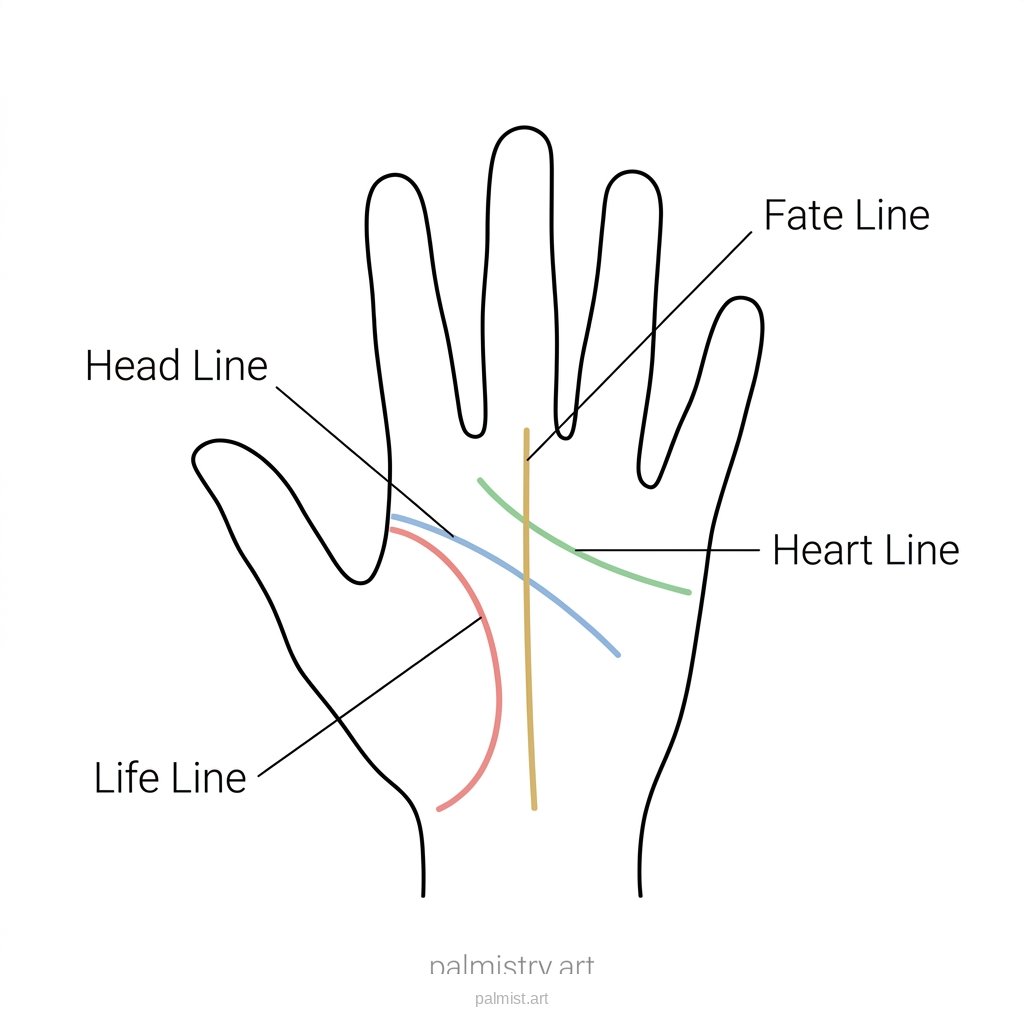
In palmistry, the hand is treated as a map made up of lines (like the life line, heart line, head line), mounts (raised areas of the palm), and shapes (the overall structure of the hand).
Each part adds context. No single line tells the whole story.
A Modern Way to Approach Palmistry
This guide takes a simple approach: focus on clear patterns, avoid overly mystical explanations, and keep interpretations grounded and readable.
The goal is not to overwhelm you with symbolism. The goal is to help you understand what you're looking at.
A Note Before You Continue
Before learning specific lines or signs, it's important to understand one thing: palmistry is about combining signals.
A single feature means very little on its own. Meaning comes from how multiple features work together.
In the next chapter, you'll learn how to actually begin reading a hand step by step.
Curious how this shows up on your own hand?
Try a personal reading →