The Structure of the Hand
The Structure of the Hand
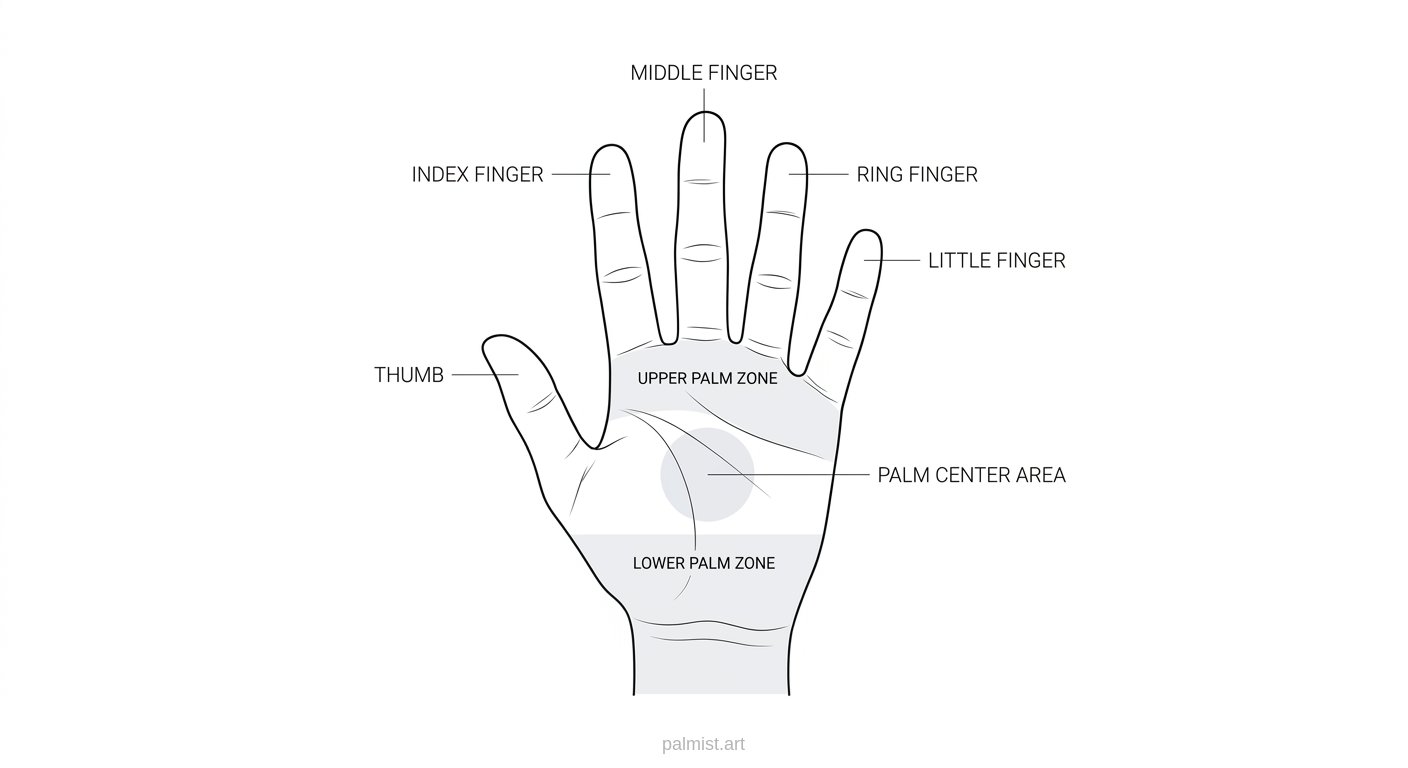
Before reading lines, you need to understand the layout of the hand. Palmistry works like a map. Each area of the hand has a role.
The Hand as a Map
In palmistry, the hand is divided into three main parts: the palm, the fingers, and the thumb. Each part contributes something different.
The palm shows core patterns. The fingers show expression and behavior. The thumb shows will and control. Together, they form a complete picture.
The Palm Area
The palm is the central area where most of the major lines appear. This is where you'll find the life line, the head line, the heart line, and the fate line (if present).
Beyond lines, the palm also contains raised areas known as mounts. The palm answers: "What patterns exist?"
The Fingers
The fingers add detail and expression. They show how a person communicates, approaches ideas, and interacts with others. Each finger has its own role: index finger relates to direction and ambition, middle finger to responsibility, ring finger to creativity, and little finger to communication.
The Thumb
The thumb is often overlooked, but it is one of the most important parts of the hand. It reflects willpower, decision-making, and control over actions.
A flexible thumb may suggest adaptability. A rigid thumb may suggest firmness or resistance to change.
How the Parts Work Together
Each part answers a different question: the palm reveals what patterns exist, the fingers show how those patterns are expressed, and the thumb reveals how those patterns are controlled.
This is why palmistry is layered. You are not reading one thing — you are reading how multiple parts interact.
Why Structure Comes Before Meaning
Many beginners jump straight to meanings. But without structure, meanings become misleading. A strong line on a weak hand tells a different story than the same line on a strong hand. Context always comes first.
Curious how this shows up on your own hand?
Try a personal reading →