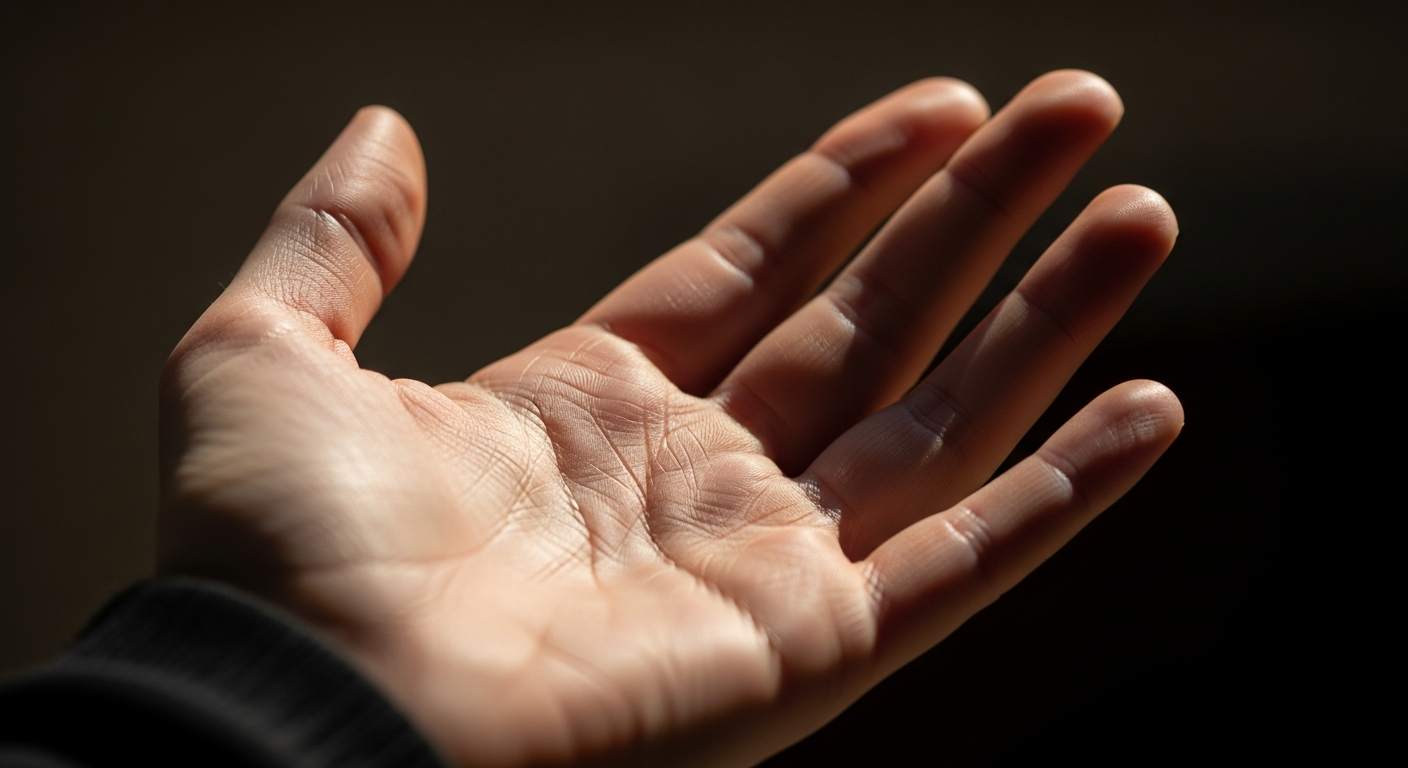
Palm Reading for Female Hands: Left vs Right and What Makes It Different
Palm reading for female hands is one of the most searched topics in palmistry — and also one of the most misunderstood. Many people believe that women's palms are read completely differently from men's, or that specific lines carry opposite meanings depending on gender. The reality is more nuanced. While the fundamental principles of palmistry apply to all hands, there are traditions that read female palms with particular emphasis on certain lines, and the question of which hand to read — left or right — has a specifically gendered answer in several palmistry traditions.
This guide covers what makes palm reading for females distinctive, which hand to read, and what the major and minor lines reveal when read in the context of a woman's hand.
Which Hand to Read for Females in Palmistry
The question of which hand to read is central to palmistry, and the answer differs across traditions — with gender playing a specific role.
Indian palmistry (Samudrika Shastra) traditionally reads the right hand for males and the left hand for females. The reasoning is rooted in the concept of active and passive energy — connected to astrology and the influence of planets in astrology on the hand. In this tradition, the left hand represents inherited traits shaped by past lives and reincarnation, while the right hand reflects what you have made of that potential through personal development and conscious choice.
Chinese palmistry follows a similar convention, traditionally favoring the left hand for women and the right for men. The left hand is associated with yin energy — receptive, intuitive, and connected to the inner self.
Western chiromancy takes a different approach. Most modern Western palmists read the dominant hand regardless of gender. If you are right-handed, your right hand is read as reflecting your current life, choices, and developed personality. Your non-dominant hand shows your inherited traits and natural predispositions. This approach treats gender as irrelevant to hand selection.
The practical recommendation: Read both hands. Your dominant hand shows who you are becoming. Your non-dominant hand shows what you started with. The differences between the two are often the most revealing part of a palm reading.
What Makes Female Palm Reading Special
While palm lines carry the same fundamental meanings regardless of gender, several traditions place specific emphasis on certain lines and markings when reading a woman's hand.
Love Marriage Line in Female Hand
The marriage line — the small horizontal line or lines found above the heart line, on the outer edge of the palm beneath the little finger — receives particular attention in female palm reading across Indian and Chinese traditions.
A single deep marriage line is traditionally associated with one significant, defining partnership. Multiple lines do not predict multiple marriages — they indicate the capacity for deep emotional connection, which may express through different relationships or different phases of the same relationship.
The love marriage line specifically refers to a formation where the marriage line curves upward or connects with the heart line. In Indian palmistry, this is traditionally read as an indicator of a love marriage — a union based on personal choice and emotional connection rather than arrangement. For women in cultures where arranged marriage is common, this marking has carried particular significance.
The length and clarity of the marriage line matters. A long, clear line suggests a stable, lasting partnership. A short line does not indicate a short marriage — it may simply reflect a private person who does not define themselves primarily through partnership.
Santan Rekha: Children Lines and Motherhood
The santan rekha — children lines — are the fine vertical lines that rise from the marriage line. These are among the most frequently asked-about markings in female palm reading.
In traditional Indian palmistry, these lines are read as indicators of a woman's relationship with children — whether biological, adopted, or children she mentors or nurtures in other roles. The number of lines does not strictly predict the number of children. Deep, clear vertical lines suggest strong bonds with a child or children. Faint lines may indicate children who are less central to the person's life path.
Modern palmistry interprets these lines more broadly, recognizing that motherhood is one expression of nurturing energy, not the only one. A woman with strong children lines may channel that energy into teaching, creative work, leadership of teams, or care for a community.
Life Line in Female Hand: Vitality and Health
The life line is read the same way for all genders — it reflects vitality, energy, and major life transitions. However, some traditions note that women's life lines may show markings associated with pregnancy, childbirth, or significant hormonal health changes. A small island on the life line, for instance, might correspond to a period of health change related to pregnancy or recovery.
The life line does NOT indicate lifespan. This myth is especially harmful when applied to women, who historically have been more likely to be frightened by palmistry predictions. A short life line means a focused, intense life energy — not a short life. For more detail, see our guide to the broken life line.
Heart Line in Female Hand
The heart line reveals emotional patterns, love style, and relationship tendencies. When reading a woman's palm, some traditions pay special attention to how the heart line relates to the head line — whether they are widely separated (suggesting emotional openness) or close together (indicating a more guarded, thoughtful approach to love).
A deep, curved heart line in a woman's hand suggests warmth, emotional expressiveness, and a giving nature in relationships. A straight heart line indicates someone who approaches love with both heart and mind — rational, discerning, and clear about what she wants.
Left Hand vs Right Hand Palm Reading for Female
The differences between a woman's left and right hand often reveal the most interesting aspects of her palm reading.
Left hand (non-dominant for most people): Shows inherited personality, natural talents, family influence, and what you were born with. This is sometimes called the "destiny hand" — the traits that were given to you.
Right hand (dominant for most people): Shows developed personality, conscious choices, career direction, and how you have shaped your own path. This is the "made hand" — what you have created from your raw material.
When the two hands show similar patterns, it suggests a life lived in alignment with natural tendencies. When they differ significantly, it indicates personal growth, deliberate change, or the overcoming of early circumstances.
For example, a weak fate line on the left hand but a strong one on the right suggests a woman who built her sense of purpose and career direction through her own effort rather than having it handed to her.
Palm Reading for Female and Career Insights
The fate line — also called the destiny line — and the head line are particularly relevant for career reading in women's hands.
A strong fate line in a woman's hand indicates a clear sense of professional direction and well-being through purpose. In traditional Indian palmistry, a fate line extending to the mount of Jupiter (beneath the index finger) suggests leadership ability and ambition. A fate line reaching the mount of Saturn (beneath the middle finger) indicates career success built on discipline and persistence. These traits were historically undervalued by society when found in women, but palmistry itself has always recognized them as strongly positive regardless of gender.
In the hand shape system — where hands are classified as earth, air, fire, or water types — earth hands with strong fate lines suggest women who build practical, lasting careers.
The sun line — associated with creativity, recognition, and public success — is another line palmists watch for in female career readings. Its presence suggests a woman whose work will bring visibility and appreciation.
The money line and money triangle, when present, indicate financial acumen and the ability to build wealth independently.
Find Other Palmistry Lines for Female
Beyond the major lines, several minor lines and markings carry particular meaning in female palm reading.
The girdle of Venus — a curved line above the heart line — suggests heightened emotional and aesthetic sensitivity. Women with this marking tend to have strong creative intuition and deep appreciation for art, beauty, and emotional connection.
The simian line — where the heart and head lines merge into a single crease — is equally rare in women and men. In a woman's hand, it suggests intense focus and emotional-intellectual fusion.
The mount of Venus — the fleshy area at the base of the thumb — reflects warmth, sensuality, and capacity for love. A well-developed mount of Venus in a woman's hand suggests a deeply loving and generous nature.
The mount of Moon indicates intuition and imagination. Women with a prominent mount of Moon often have strong psychic or intuitive abilities — or simply a rich inner life that informs their decisions and creativity.
Clearing Myths About Palm Reading for Female
Several myths persist specifically about female palm reading. Let us address them directly.
Myth: Women's palms predict marriage and children above all else.
Reality: Every line on a woman's palm carries the same range of meaning as on any hand. Career, intellect, creativity, health, and purpose are all equally readable. Reducing female palm reading to marriage and motherhood is a cultural bias, not a palmistry truth.
Myth: A missing marriage line means a woman will never marry.
Reality: The absence of a marriage line does not predict anything about future relationships. It may indicate someone who defines fulfillment differently, or whose deepest partnerships express in non-traditional ways.
Myth: The left hand is always the correct hand for women.
Reality: This depends entirely on which tradition you follow. Modern palmistry reads the dominant hand as primary, regardless of gender. Both hands provide valuable information.
Myth: Palmistry can predict the gender of future children.
Reality: No credible palmistry tradition makes this claim. Fortune-telling predictions about children's gender are not part of authentic palmistry practice. Palmistry is an art of self-reflection, not prediction.
Frequently Asked Questions
How to read palm lines for female?
Start by examining your dominant hand for current patterns and your non-dominant hand for inherited traits. Identify the four major lines — heart, head, life, and fate — and note their depth, length, and any breaks or branches. For women specifically, many traditions also examine the marriage line and children lines above the heart line.
Which hand is read for females in palmistry?
It depends on tradition. Indian and Chinese palmistry traditionally read the left hand for women. Western palmistry reads the dominant hand regardless of gender. Reading both hands and comparing them provides the most complete picture.
What does the marriage line mean in a woman's hand?
The marriage line reflects your approach to deep partnership — not a prediction of if or when you will marry. A clear, deep line suggests capacity for lasting commitment. Multiple lines indicate emotional depth across relationships.
Can palm reading tell if a woman will have children?
Palm reading cannot predict whether you will have children. The children lines (santan rekha) reflect your relationship with nurturing energy — which may express through biological children, adoption, mentoring, teaching, or other forms of care.
For a personalized reading of your palm lines, try our free AI palm reading. Upload a photo and receive insights based on your actual hand, interpreted through multiple palmistry traditions.
You might also explore our complete guide to palm reading or learn about what all palm lines mean.
Palmistry is an ancient art practiced for thousands of years across many cultures. All readings are for educational and entertainment purposes based on traditional interpretations. They are not predictions and should not be used as the basis for life decisions.
The Art of Palmistry
Go deeper with our 20-chapter visual guide. Learn hand shapes, lines, mounts, and how to read a palm step by step.
Read the Book →See what your palm reveals
Upload a photo and get an instant AI-powered reading based on the traditions discussed in this article.
Read My Palm — It's Free