Broken Life Line: What It Really Means in Palmistry
Few markings on the palm cause as much anxiety as a broken life line. People see a gap and jump to the worst conclusion — that a short or broken line means a short life. This is one of the most persistent myths in palmistry, and it is simply not true. No palmist in any major tradition reads the life line as a timer. A broken life line does not predict death, disease, or catastrophe. Despite what some psychic readers or fortune-telling websites might claim, the life line is not a countdown. What it does reveal is far more interesting and far less frightening.
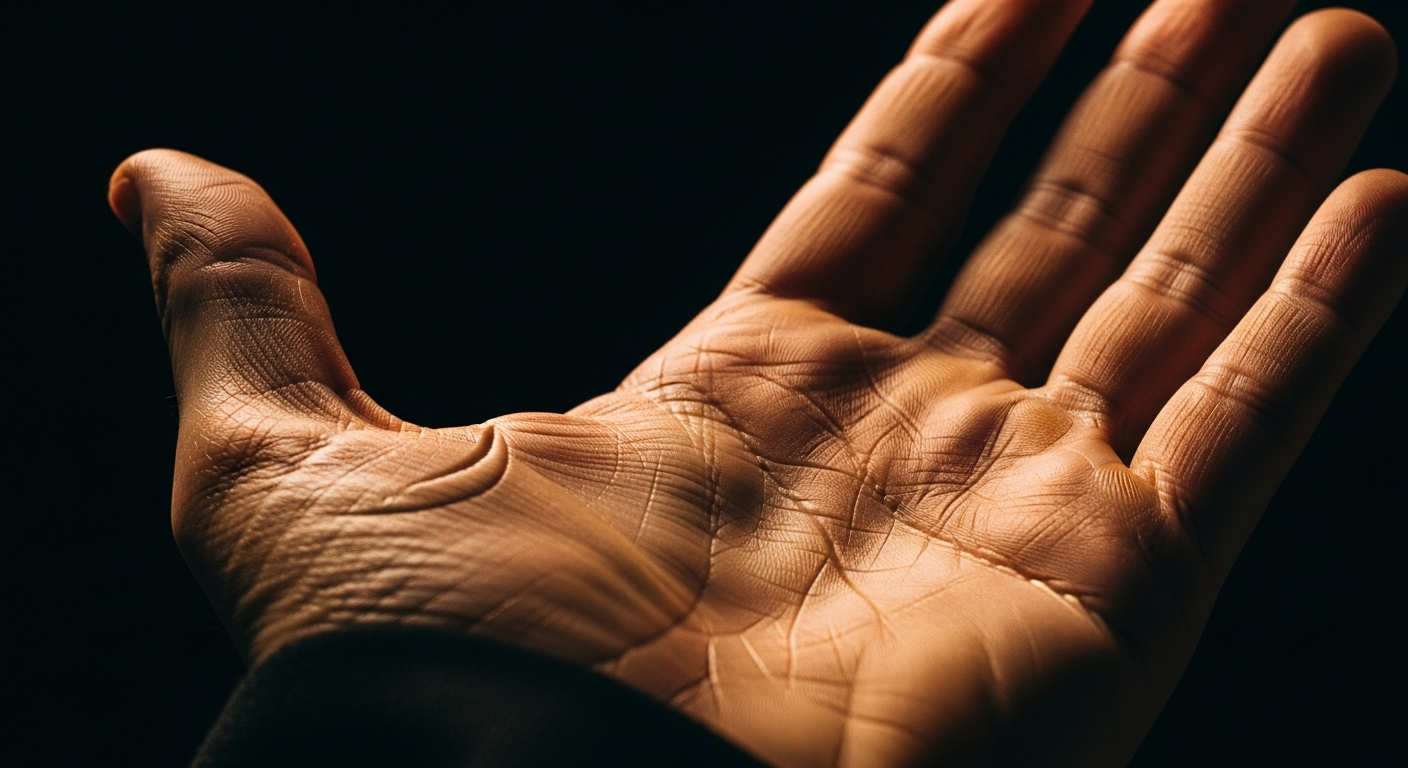
The life line is the curved line that arcs around the base of your thumb, sweeping from between the index finger and thumb down toward the wrist. In Indian palmistry and Samudrika Shastra, it is called the jivan rekha — the line of life. In Chinese palmistry, it reflects your overall vitality, energy level, and the quality of life you experience through different periods. In Western chiromancy, it maps the major life events, transitions, and turning points that shape your personal journey.
When this line breaks, it tells a story about change — not an ending.
What a Broken Life Line Looks Like
A broken life line is a visible gap where the line stops and then resumes. But the nature of the break matters enormously, and palmists interpret different types of breaks in very different ways.
A single clean break — where the line ends and picks up again after a gap — suggests a significant life change. This could indicate a major relocation, a career transformation, a health challenge that was overcome, or a period where the direction of your life shifted fundamentally. The break marks the boundary between one chapter and the next.
An overlapping break — where the old line and the new line run parallel for a short distance — is considered one of the most positive formations in palmistry. It suggests that the transition was smooth, that the new phase of life began before the old one fully ended. Many palmists read this as a sign of psychological resilience and adaptability.
Multiple small breaks along the life line can indicate a life marked by frequent change — someone who has faced challenges and transitions repeatedly but has continued to move forward. Each break is a pivot point, not a stopping point.
A break with a square formation around it — where small lines create a rectangular shape enclosing the gap — is traditionally read as a sign of protection. Palmists across traditions interpret this as evidence that during a difficult period, something — whether inner strength, the support of others, or simple courage — carried you through.
Where the Break Occurs on Your Life Line
The placement of the break along the life line offers guidance about the timing and nature of the change it represents.
Break Near the Top (Early Life)
A break in the life line near its starting point — between the thumb and index finger — often relates to events in early life or childhood. This might indicate a significant disruption during formative years: a family move, a change in circumstances, or a period of instability that shaped who you became. The attention here is on how these early experiences influenced your overall vitality and approach to life.
Break in the Middle
A break in the middle of the life line typically corresponds to the middle years of life. This is often associated with major life changes — a career shift, a divorce, a significant health event, or a period of deep personal transformation. The location of the break helps palmists understand when the shift occurred and how it relates to the overall landscape of your life.
Break Near the Bottom (Later Life)
A break lower on the life line, toward the wrist, can indicate a later-life transition — retirement, a significant move, or a shift in how you spend your energy and time. In Chinese palmistry, a break here is sometimes read as a change in lifestyle rather than a disruption.
Short Life Line: Does Length Matter?
One of the most common questions in palm reading is whether a short life line means a short lifespan. The answer, across every credible tradition of palmistry, is no.
The length of your life line reflects the breadth and depth of your life experience, not its duration. A short life line can indicate someone who lives with intensity and focus rather than someone whose life will be cut short. Some palmists read a short line as a sign of someone who channels their energy into fewer but more significant pursuits.
A life line that appears short might also simply continue in a less visible form — faint lines, branch lines, or connections to other palm lines can extend the life line's meaning beyond its visible length. This is why palmistry requires reading the whole hand, not just one line in isolation.
The Life Line and Other Palm Lines
A broken life line should always be read in context with the other major lines on your palm.
The head line reveals how your thinking and decision-making relate to life changes. If the head line is strong and clear at the point where the life line breaks, it suggests that wisdom and clear thinking helped you navigate the transition.
The heart line shows whether emotional experiences coincided with the life change. A break in the life line that aligns with a break in the broken heart line can indicate that a major life transition and an emotional upheaval happened at the same time.
The fate line — sometimes called the destiny line — intersects with the life line in ways that reveal the relationship between your sense of purpose and your overall life energy. When the fate line crosses the life line at a break point, it often indicates that a career or destiny shift was the driving force behind the life change.
The mount of Venus — the fleshy area at the base of your thumb — provides context about your overall vitality, warmth, and capacity for love. A well-developed mount of Venus alongside a broken life line suggests that despite life's disruptions, your fundamental energy and passion for life remain strong.
Broken Life Line in Different Palmistry Traditions
Different traditions bring different understanding to breaks in the life line.
Western chiromancy tends to read breaks as specific events — relocations, career changes, health challenges, or other concrete turning points. The emphasis is on what happened and how it changed the course of your life.
Chinese palmistry reads the life line more fluidly, seeing breaks as natural transitions in the flow of vital energy. The focus is less on specific events and more on the overall quality of your vitality before and after the break. A life line that resumes strongly after a break is considered a sign of excellent resilience.
Indian palmistry (Samudrika Shastra) interprets the broken life line in relationship to the mounts, the finger proportions, and the markings elsewhere on the palm. In this tradition, a break is never read in isolation. The overall hand shape, the depth of the palm lines, and even the texture of the skin contribute to an accurate interpretation. Vastu principles may also influence how the break is understood in relation to the person's environment and living situation.
What Markings Near the Break Mean
Small markings near a break in the life line can significantly alter its meaning.
Dots or islands near the break might indicate periods of stress or health challenges associated with the transition. These are not permanent conditions — they reflect temporary difficulties during a period of change.
Branches extending upward from the life line near a break are traditionally read as positive — they suggest new opportunities for growth, new directions, or the beginning of something meaningful.
Branches dropping downward can indicate that the transition involved loss of energy, resources, or stability. These markings reflect the difficulty of the change, not its permanence.
A sister line — a faint line running parallel to the life line — is considered highly protective. If a sister line appears alongside a broken life line, it suggests that inner strength, family support, or a guardian quality carried you through the difficult period. In Indian palmistry, this is sometimes called a Mars line and is associated with courage and determination.
A Broken Life Line Is a Story of Resilience
The most important truth about a broken life line in palmistry is that it does not define your future. It reflects your past — the moments where your life changed direction, the challenges you faced, and the resilience you demonstrated in moving forward.
Many of the most remarkable people in history would have had broken life lines — people who reinvented themselves, who survived upheaval, who found new purpose after loss. A break in the life line is evidence of a life fully lived, with all the complexity and change that real living involves.
If you notice a break in your life line, consider what it might represent. What was the turning point? How did your life change? And how did you find the energy and determination to continue?
For a complete analysis of your life line and all four major palm lines, try our free AI palm reading. Our technology identifies your life line automatically and provides personalized insights based on what your palm reveals.
You might also explore our complete guide to palm reading or learn about what all four palm lines mean.
Frequently Asked Questions
What does a broken life line mean?
A broken life line indicates a major life transition — a relocation, career change, health recovery, or fundamental shift in lifestyle. It does not predict death or illness. The break represents the boundary between one life chapter and the next.
Does a short life line mean a short life?
No. This is the most persistent myth in palmistry, and every credible tradition rejects it. The length of the life line reflects the breadth and intensity of your life experience, not its duration. Many people with short life lines live long, full lives.
Is a broken life line bad?
No. A broken life line reflects change, not catastrophe. An overlapping break — where the old and new lines run parallel briefly — is actually considered one of the most positive formations in palmistry, suggesting a smooth life transition and strong resilience.
Can your life line change over time?
Yes. Palm lines are not fixed at birth. They can deepen, fade, extend, or develop new branches throughout your life. The life line in particular may change to reflect major life events, health improvements, or shifts in lifestyle and energy.
What does it mean when the life line and fate line cross?
When the fate line crosses or touches the life line, it traditionally suggests that career direction and life energy are closely connected. A break in the life line near this crossing may indicate that a career change was the driving force behind a major life transition.
Palmistry is an ancient art practiced for thousands of years across many cultures. It is not scientifically validated and should not replace professional medical advice. A broken life line has no connection to physical health outcomes or lifespan.
The Art of Palmistry
Go deeper with our 20-chapter visual guide. Learn hand shapes, lines, mounts, and how to read a palm step by step.
Read the Book →See what your palm reveals
Upload a photo and get an instant AI-powered reading based on the traditions discussed in this article.
Read My Palm — It's Free