Broken Heart Line in Palmistry: What Breaks, Forks, and Gaps Really Mean
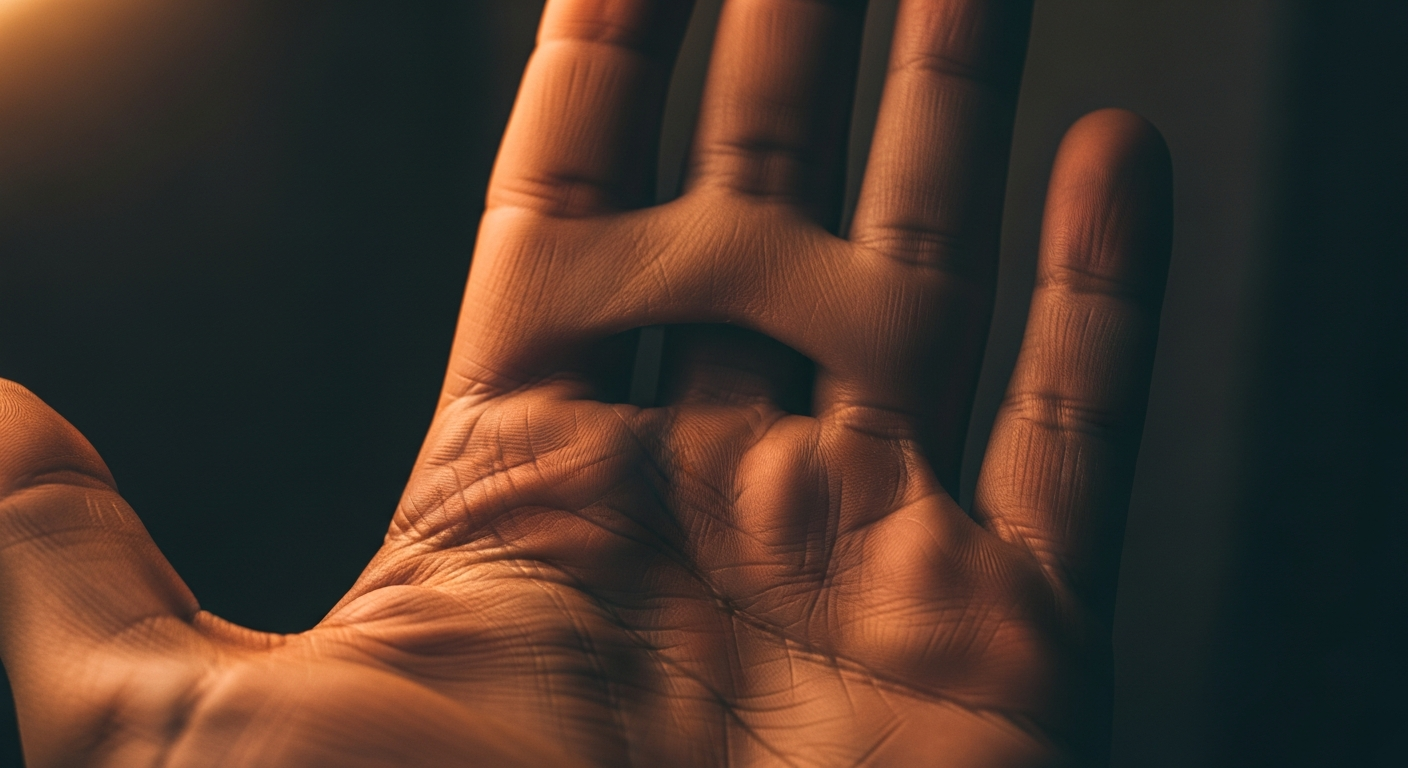
A broken heart line is one of the most misunderstood markings in palmistry. People notice it and worry — as though a gap in a palm line is a prediction of heartbreak, loss, or emotional failure. It is not. In every major tradition of palm reading, a break in the heart line is a sign of change, not catastrophe. It indicates a shift in how you experience love, not the end of your ability to feel it. There is no reason for fear when you see a break in this line. If anything, it reflects a heart that has known enough compassion and connection to be reshaped by experience.
The heart line — called the love line in popular palmistry and the anahata rekha in the Indian tradition of Samudrika Shastra — is the uppermost horizontal line on your palm. It runs from the edge of the hand beneath the little finger toward the index or middle finger. When this line is broken, it tells a story about emotional transformation that is worth reading carefully.
What a Broken Heart Line Looks Like
A broken heart line is exactly what it sounds like: the line stops, a gap appears, and then the line resumes. But not all breaks are the same, and the differences matter deeply in palmistry.
A clean break — where the line ends clearly and picks up again after a visible gap — suggests a definite emotional turning point. This could indicate a relationship that ended in a way that required real recovery. The gap is not empty space. It represents the time between one emotional chapter and the next, the quiet period where you rebuild before opening your heart again.
An overlapping break — where the old line and the new line run parallel for a short distance before the transition completes — is traditionally read as a smoother change. One relationship or emotional phase fades while the next is already beginning. In Chinese palmistry, this overlap is considered a sign of emotional resilience.
Multiple small breaks along the heart line can indicate a pattern of emotional ups and downs — not instability, but a life marked by many transformative experiences in love and relationships. Each break is a pivot, a moment where your emotional life shifted direction.
Where the Break Occurs Matters
The location of the break along the heart line changes its meaning significantly.
Break Under the Middle Finger
A break beneath the middle finger — the finger of Saturn — often relates to endings shaped by practical reality. A relationship that dissolved because of distance, financial pressure, career demands, or the weight of responsibility. The heart wanted to stay, but the circumstances made it impossible.
Break Under the Ring Finger
When the break appears under the ring finger — associated with Apollo, creativity, and self-expression — the emotional shift tends to be more personal. This might indicate a period where you redefined what love means to you, or where a relationship ended because you outgrew it. It can also signify a deep emotional experience connected to passion, art, or personal identity.
Break Under the Index Finger
A break near the end of the heart line, beneath the index finger of Jupiter — sometimes called the mount of Jupiter in palmistry and astrology — can indicate a challenge to your emotional ideals. Perhaps you discovered that a person or relationship did not match the vision you held for your love life. This is the break of disillusionment — painful in the moment, but often the beginning of more realistic and ultimately more fulfilling emotional expectations.
Where the heart line ends also matters. If the line resumes after the break and continues to a stable endpoint, the emotional recovery was thorough. If the line becomes fainter or changes direction after the break, the transformation may have permanently altered your approach to love.
Forked Heart Line: Not the Same as Broken
A fork at the end of the heart line is quite different from a break in the middle, though people sometimes confuse the two.
A fork toward both the index and middle finger is one of the most positive formations in palmistry. Sometimes called the "writer's fork" or "humanitarian fork," it suggests someone who combines emotional depth with practical wisdom. You can love deeply while also thinking clearly about your relationships.
A fork that splits the line into two equal branches can indicate a person who feels pulled between two emotional modes — between passion and reason, between independence and partnership, between the desire for security and the craving for intensity.
Small forks or branches dropping downward from the heart line are traditionally associated with periods of emotional difficulty — heartbreak, disappointment, or loss that left a clear mark on your emotional landscape. These are not permanent conditions. They are evidence of a heart that has felt deeply enough to be affected by experience.
Branches rising upward indicate joyful emotional connections and are considered signs of positive relationships that elevated your emotional life.
The Straight Heart Line vs. the Curved Heart Line
The shape of the heart line itself — regardless of breaks — reveals a great deal about emotional temperament.
A curved heart line that arcs upward indicates an expressive, passionate nature. You are likely to be open with your feelings, romantic in your outlook, and willing to take emotional risks. When this type of heart line is broken, the break tends to be dramatic — a clear before and after in your love life.
A straight heart line running more or less horizontally suggests a more measured, logical approach to emotions. Your heart and mind work together. When a straight heart line breaks, the transition may be quieter — less visible to others, but no less significant internally.
A heart line that is short, ending under the middle finger rather than extending toward the index finger, does not mean your capacity for love is limited. It can indicate someone who values emotional independence and expresses love through actions rather than words.
Types of Heart Lines and What They Indicate
Understanding the different formations of the heart line helps put breaks and forks into context.
The deep, clearly etched heart line indicates strong emotional clarity. When this line breaks, it suggests a significant and conscious emotional change — you knew what happened and you processed it.
The chained heart line — a line that looks like a series of small links — suggests emotional sensitivity and complexity. Breaks in a chained heart line may represent moments of particular intensity within an already emotionally rich life.
The faint or thin heart line does not indicate weakness of feeling. It may point to someone who experiences emotion privately. Breaks here can be harder to see but no less meaningful.
Reading a Broken Heart Line in Context
No line in palmistry exists in isolation. A broken heart line should always be read alongside the other major lines.
The head line reveals how your thinking style relates to your emotional patterns. If the head line is strong where the heart line breaks, it suggests that intellect helped you navigate the emotional transition.
The life line provides context about your overall vitality and energy during the period when the heart line is broken. A strong life line at the corresponding point suggests you had the inner resources to recover well.
The marriage line — the small horizontal line or lines above the heart line — offers additional detail about specific relationships. A break in the heart line combined with multiple marriage lines can indicate several significant relationships, each transformative in its own way.
The mount of Venus, the fleshy area at the base of the thumb, reflects your overall capacity for love, warmth, and sensuality. A well-developed mount of Venus alongside a broken heart line suggests that despite emotional upheaval, your fundamental nature remains warm and open to connection.
In Indian palmistry and vastu-influenced readings, the relationship between the heart line and the fate line is especially telling. When the heart line breaks near where the fate line intersects it, this can indicate that a career change and an emotional shift happened simultaneously.
What Palmistry Traditions Say About Broken Lines
Different traditions interpret breaks with different emphasis.
Western chiromancy tends to read breaks as specific events — a relationship ending, an emotional crisis, a period of heartbreak followed by recovery.
Chinese palmistry often reads breaks more fluidly, seeing them as natural transitions in the emotional life rather than traumatic events. The focus is on what the line looks like after the break — is it stronger? Does it change direction?
Indian palmistry (Samudrika Shastra) reads the broken heart line in relationship to numerology, the mounts, and the overall hand shape. A break is never read in isolation but as part of a larger pattern that includes the finger proportions, the texture of the palm, and the other markings present.
A Broken Heart Line Is Not a Broken Heart
The most important thing to understand about a broken heart line in palmistry is that it does not predict heartbreak. It reflects emotional change — the kind that every person who has loved deeply will experience at some point.
Some of the most emotionally fulfilled people have broken heart lines. The breaks represent the moments where they grew, where they learned something new about love, where they let go of one way of connecting and discovered another. A break can even become a source of motivation — the emotional clarity that comes after a difficult transition often drives people toward healthier, more intentional relationships.
It is also worth noting that a broken heart line has no connection to physical disease or heart conditions. This is a common misconception. Palm lines reflect emotional and personality patterns in the tradition of palmistry — they are not medical indicators.
If you notice a break in your heart line, consider it an invitation to reflect — not a reason to worry. What emotional transition does it mark? What did you learn from the change? How did your capacity for love evolve afterward?
For a complete analysis of your heart line and all four major palm lines, try our free AI palm reading. The technology identifies your heart line automatically and provides personalized insights based on what your palm reveals.
You might also explore our complete guide to palm reading or learn about what all four palm lines mean.
Frequently Asked Questions
What does a broken heart line mean in palmistry?
A broken heart line indicates a significant emotional transition — a period where your approach to love or relationships changed fundamentally. It does not predict heartbreak. The break marks the boundary between one emotional chapter and the next, and the line resuming after the break suggests recovery and growth.
Can you physically have a broken heart line?
Yes. A broken heart line is a visible gap where the heart line stops and resumes after a space. It is a physical feature of the palm, not a metaphor. The size of the gap, whether the segments overlap, and where on the line the break occurs all affect its interpretation.
What does a split heart line mean?
A split or forked heart line is different from a broken one. A fork at the end of the heart line — especially one reaching toward both the index and middle fingers — is considered positive in palmistry, suggesting someone who balances emotional depth with practical wisdom.
Are broken heart lines good or bad?
Neither. A broken heart line simply reflects emotional change. Some of the most emotionally fulfilled people have broken heart lines — the breaks represent moments of growth, transformation, and deepened understanding of love.
Where is a broken heart line located?
The heart line is the uppermost horizontal line on your palm. A break can occur anywhere along its length — beneath the middle finger, the ring finger, or near the index finger. The location of the break changes its traditional interpretation.
Palmistry is a traditional art form for entertainment and self-reflection. It is not scientifically validated and should not replace professional advice.
The Art of Palmistry
Go deeper with our 20-chapter visual guide. Learn hand shapes, lines, mounts, and how to read a palm step by step.
Read the Book →See what your palm reveals
Upload a photo and get an instant AI-powered reading based on the traditions discussed in this article.
Read My Palm — It's Free