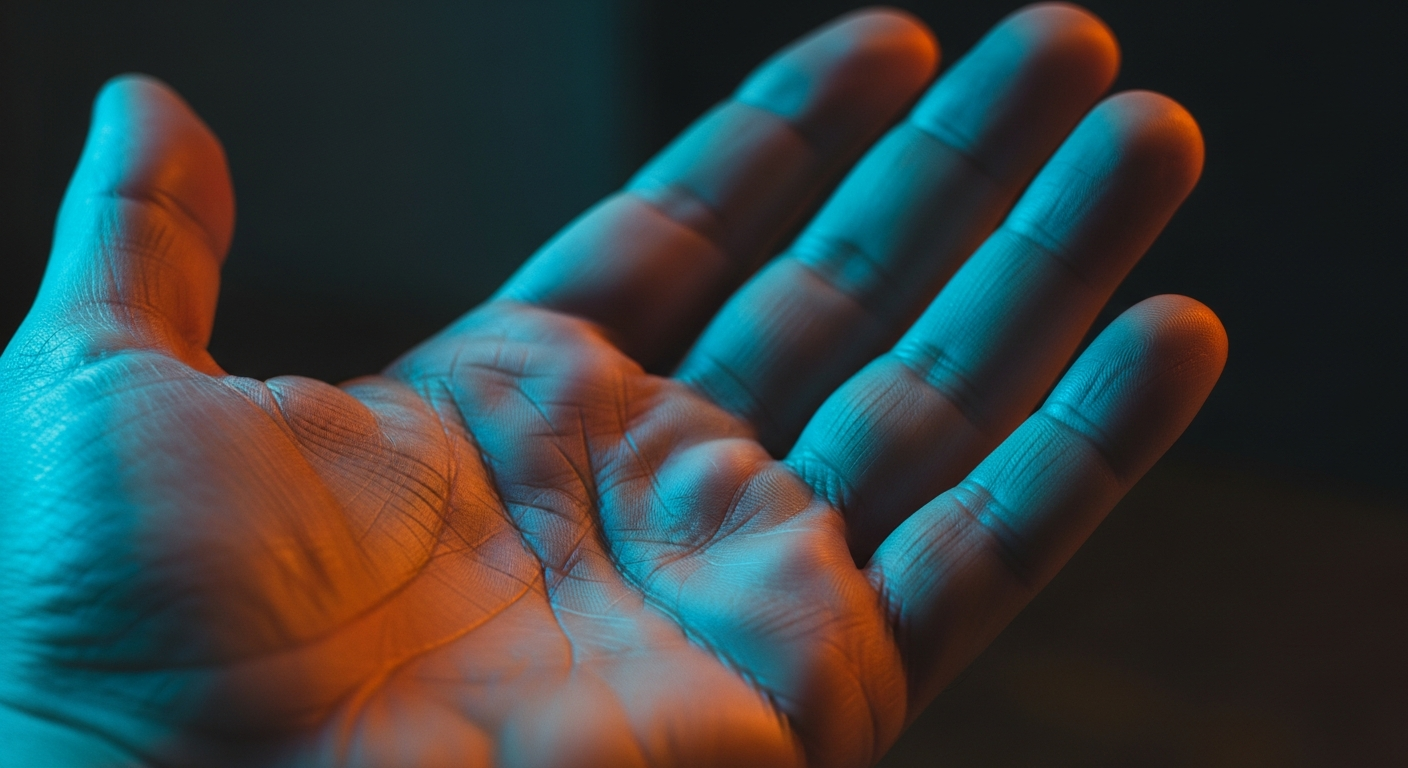
Health Line in Palmistry: What Your Palm Says About Your Wellbeing
The health line is one of the most misunderstood lines in palmistry. Unlike the heart line or the life line, the health line does not appear on every palm — and its absence is actually considered a good sign. In traditional palm reading, a missing health line suggests robust physical and mental health. It is when the health line appears prominently that palmists pay close attention.
The health line — sometimes called the line of Mercury, the liver line, or the line of health — typically runs from the base of the palm near the wrist upward toward the little finger (the Mercury finger). Its path may cross or approach the life line, the head line, or both, and these intersections carry their own meanings.
It is important to state clearly: the health line in palmistry does not diagnose disease. It does not predict illness. Palm reading is a traditional art, not a medical practice. What the health line reflects, according to centuries of palmistry tradition, are patterns related to vitality, stress, digestive health, nervous energy, and overall physical and mental wellbeing.
What the Health Line Looks Like
The health line varies significantly from hand to hand. Its appearance — or absence — is the first thing a palm reader evaluates.
No health line visible: This is traditionally the best sign. The absence of the health line suggests a strong constitution, good vitality, and few health-related concerns. If your palm shows clear major lines but no health line, most palmistry traditions read this positively.
A clear, straight health line: A well-defined line running without breaks from the base of the palm toward the mount of Mercury (beneath the little finger) suggests awareness of your physical condition. You may be someone who pays attention to your body and responds to its signals.
A wavy health line: A health line that curves and undulates rather than running straight is traditionally associated with digestive system issues — concerns related to the stomach, liver, gastrointestinal tract, or bile production. In Chinese palmistry, a wavy line suggests that vital energy does not flow smoothly through the body.
A chained health line: When the health line appears as a series of small links — like a chain — palmists traditionally read this as a sign of recurring health problems or chronic stress. The chain pattern suggests that health concerns come and go rather than persisting as a single condition.
A health line composed of many short lines: Rather than one continuous line, some palms show the health line as a series of dashes or fragments. This can indicate anxiety, nervous energy, or psychological stress that manifests in physical symptoms.
Where the Health Line Starts and Ends
The starting point and endpoint of the health line provide additional context for interpretation.
Health Line Starting from the Base of the Palm
When the health line begins near the base of the palm — sometimes near the bracelet lines at the wrist — and extends upward, it suggests that health patterns have been present throughout life. The lower the starting point, the earlier in life these patterns may have begun.
Health Line Starting from the Life Line
A health line that appears to originate from the life line is read with particular care. In Western chiromancy, this intersection can indicate a period where health concerns affected overall vitality. The point where the two lines meet is traditionally used to estimate the timing of that connection.
Health Line Ending at the Head Line
When the health line ends at or near the head line, palmists may read this as a connection between mental health and physical wellbeing — headaches, brain fog, anxiety, or stress-related conditions that affect both mind and body.
Health Line Ending at the Heart Line
A health line that extends to or crosses the heart line can indicate a traditional association with cardiovascular health or circulatory system concerns. In Indian palmistry, this formation is sometimes read as suggesting someone who should pay attention to cardiovascular disease risk factors — heart health, blood pressure, and overall cardiovascular well-being.
The Health Line and the Mount of Mercury
The health line's relationship with the mount of Mercury — the fleshy area beneath the little finger — is significant. Mercury governs communication, intellect, and in palmistry traditions connected to astrology, the nervous system and digestive function.
A strong mount of Mercury with a clear health line suggests someone who is both aware of their health and capable of managing it well. A flat mount of Mercury with a wavy or chained health line can indicate that health challenges are compounded by difficulty in communicating about them or seeking help.
Fine vertical lines on the mount of Mercury are traditionally called "healing lines" or "medical stigmata." People with these markings are sometimes drawn to healing professions — medicine, nursing, therapy, or energy work. The presence of these fine lines suggests a natural sensitivity to others' physical and emotional states.
Signs and Markings on the Health Line
Small markings along the health line modify its interpretation significantly.
Islands on the health line: An island — a small oval formation where the line splits and rejoins — is traditionally associated with a specific period of poor health. Islands on the lower portion of the health line near the life line may relate to kidney or bladder concerns. Islands in the middle may suggest liver or gall bladder function issues. Islands near the top can indicate lung or respiratory patterns.
A cross on the health line: Crosses generally indicate obstacles or turning points. A cross on the health line can suggest a health crisis that served as a wake-up call — a moment that changed your approach to self-care and wellbeing.
A star at the junction of the health line and head line: This is one of the formations palmists watch for most carefully. A star at this intersection is traditionally associated with mental health concerns — severe stress, anxiety, or mental disorder patterns that may require professional support.
A triangle on the health line: Triangles are generally protective in palmistry. A triangle on or near the health line suggests resilience and strong immunity — the ability to recover from health setbacks and maintain wellbeing despite challenges.
A broken line: Breaks in the health line can indicate periods where health patterns changed — either improvement or decline. A line that resumes more strongly after a break suggests recovery from fever, illness, or chronic conditions. A line that becomes fainter after a break may indicate ongoing low energy.
Other markings palmists note include dots (sometimes associated with visual impairment or eye strain), squares (protective formations suggesting recovery), and crosses at specific mount intersections. The health line is also read in the context of the person's age — patterns observed in a child's hand carry different weight than those in an adult's palm.
The Health Line Across Palmistry Traditions
Different traditions bring different emphasis to the health line.
Western chiromancy reads the health line primarily as an indicator of digestive and nervous system health. The focus is on the line's clarity, direction, and relationship with the other major lines. A health line that crosses the life line is given particular attention.
Chinese palmistry interprets the health line through the lens of vital energy (chi). A smooth, clear health line suggests good energy flow. A disrupted line — wavy, chained, or broken — indicates blocked or irregular energy that may manifest as physical symptoms. The emphasis is on balance and lifestyle rather than specific diseases.
Indian palmistry (Samudrika Shastra) connects the health line to the Mercury finger and the mount of Mercury, reading it alongside the nail shape, finger length, and overall hand texture. The condition of the nails — ridges, color, shape — provides additional health indicators in this tradition. Indian palmistry also considers the relationship between the health line and the fate line, examining whether health concerns influenced career or destiny.
The Health Line in Context
The health line should never be read in isolation. It interacts with every other line and feature on the palm.
A strong life line alongside a concerning health line suggests that overall vitality compensates for specific health patterns. The life line reflects your fundamental energy and resilience.
The mount of Venus — the fleshy area at the base of the thumb — indicates your overall life force. A well-developed mount of Venus alongside a health line suggests that despite health awareness, your fundamental vitality is strong.
The head line reveals whether mental patterns contribute to physical health concerns. A clear, strong head line suggests that psychological resilience helps manage whatever the health line indicates.
Your ring finger and the mount of Apollo can indicate how lifestyle choices — creativity, self-expression, joy — contribute to or detract from overall wellbeing.
What the Health Line Does NOT Tell You
This point deserves emphasis: the health line in palmistry is not a medical diagnostic tool.
It does not predict specific diseases. It does not tell you whether you will develop heart disease, liver problems, or any other condition. It does not replace blood tests, medical examinations, or professional healthcare.
What the health line reflects, within the tradition of palmistry, is your body's general tendencies — patterns of energy, stress, digestion, and nervous system activity that palmists have observed and categorized over thousands of years. These observations may prompt useful self-reflection about lifestyle, self-care, and attention to your body's signals.
If you have health concerns, consult a medical professional. Palm reading is for self-reflection and entertainment, not diagnosis.
Reading Your Health Line
To find your health line, hold your palm open in good light. Look for a line running from the lower palm — near the wrist or the base of the life line — upward toward the little finger. It may be faint, broken, or absent entirely.
If you do not see a health line, that is traditionally a positive sign. If you do see one, note its qualities: is it straight or wavy? Clear or chained? Does it cross other major lines?
For a complete analysis of all your palm lines, try our free AI palm reading. While the health line requires detailed visual examination, our technology identifies your four major lines and provides personalized insights based on what your palm reveals.
You might also explore our complete guide to palm reading or learn about what all palm lines mean.
Frequently Asked Questions
What is the health line in palmistry?
The health line runs from the lower palm near the wrist upward toward the little finger (Mercury finger). Unlike the major lines, its absence is considered positive — a missing health line suggests strong overall health and vitality.
Can palm reading predict health problems?
No. The health line in palmistry does not diagnose disease or predict specific health conditions. It reflects traditional observations about patterns of vitality, stress, and nervous energy. It should never replace professional medical advice or examination.
Does the palmistry health line touching the life line mean anything?
In traditional palmistry, a health line that touches or crosses the life line is given careful attention. This intersection can suggest a period where health patterns affected overall vitality. However, this is a traditional interpretation, not a medical indicator.
Is the absence of a health line good or bad?
The absence of a health line is traditionally considered a positive sign in palmistry. It suggests robust health, strong constitution, and few health-related concerns. Not having a health line is more common than having one.
Where is the palmistry health line located?
The health line typically runs from the base of the palm (near the wrist or the lower portion of the life line) upward toward the mount of Mercury beneath the little finger. It may be straight, wavy, chained, or composed of short segments.
Palmistry is an ancient art practiced across many cultures for thousands of years. The health line and all palm readings are for educational and entertainment purposes only. They are not medical advice and should never replace consultation with qualified healthcare professionals.
The Art of Palmistry
Go deeper with our 20-chapter visual guide. Learn hand shapes, lines, mounts, and how to read a palm step by step.
Read the Book →See what your palm reveals
Upload a photo and get an instant AI-powered reading based on the traditions discussed in this article.
Read My Palm — It's Free